

SUNDAY ROBOTICS
Sunday.ai
ProjectBringing a Home Robot to Life on Screen
When a robotics company is building the future of the home, the visuals can’t feel speculative. They have to feel real.
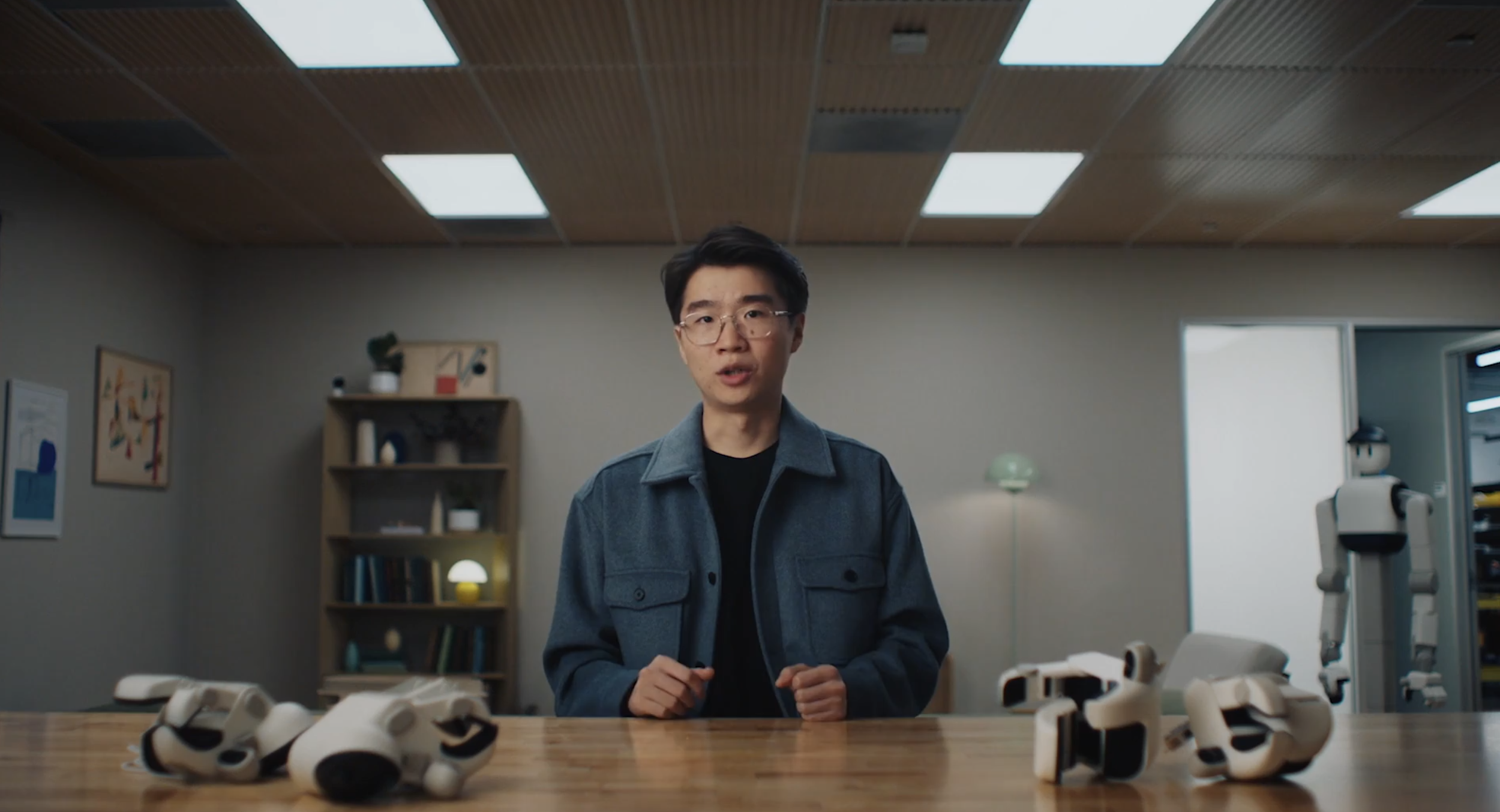
That was the mandate behind our work with Sunday.ai — to create a suite of launch films that didn’t just explain the product, but proved it. No vaporware. No overpromising. Just a home robot named Memo performing real tasks in real environments.
This wasn’t a typical tech shoot. It was a production that sat at the intersection of AI research, precision robotics, and cinematic storytelling.
And it required far more than just cameras and lighting.

Pre-Production: Syncing with Engineering
Before we ever stepped on set, we embedded with the robotics team to understand:
Which skills were production-ready
Where edge cases might cause failure
How many successful repetitions were achievable per hour
What environmental variables could impact performance
Unlike traditional talent, a robot can’t “just try it again” without recalibration. Lighting shifts can affect sensors. Set changes can alter spatial mapping. Even moving a chair two inches can impact task execution.
So pre-production became a hybrid between a film tech scout and a robotics systems audit.
The Bigger Picture
For us, this wasn’t just another product shoot.
It demonstrated our ability to:
Translate complex emerging technology into compelling visual storytelling
Operate inside engineering timelines and constraints
Build production frameworks around hardware and AI systems
Capture proof — not hype
When you’re working with frontier technology, production becomes part of the product narrative. The camera isn’t just documenting innovation — it’s validating it.
Capture Intelligence in Motion
The Challenge:Memo isn’t an app. It isn’t a UI. It’s a physical machine operating in unpredictable human environments.
That changes everything.
Every action you see on the site — clearing a table, folding socks, handling fragile glassware, making espresso — represents months of engineering development. Which meant our production schedule had to align with software readiness, hardware stability, and task reliability.
We weren’t just documenting capability.
We were filming engineering milestones.
Post-Production: Honoring the Authenticity
The goal wasn’t to exaggerate capability. It was to present it clearly.
We avoided over-stylization. We let the actions breathe. Sound design emphasized physical interaction — the clink of glass, the fabric movement of laundry — grounding the technology in everyday life.
The edit balanced two things:
Emotional vision — the future of home robotics.
Technical credibility — this works today.
That balance is everything for a company introducing a new category.